Project
In Silico Biolabs
Founder-led testing and development of a computational biology platform built around licensed Sandia pathway-discovery technologies (RetSynth, Met2Saf) for drug discovery, specialty chemicals, and industrial biotechnology.
Context
In Silico Biolabs is testing and developing licensed Sandia National Laboratories pathway-discovery technologies, including RetSynth and Met2Saf, into a usable platform for predicting compound-production routes. The mission is to make advanced biopathway synthesis and metabolic informatics practical for drug discovery, specialty chemicals, and industrial biotechnology R&D.
The Sandia collaboration
Through a Technology Readiness Gross Receipts (TRGR) project with Sandia (Alexander Landera) and In Silico Biolabs, we are combining Sandia's expertise in metabolic genomics, bioinformatics, and pharmacokinetic modeling with ISBL's productization work. The goal is to demonstrate that the integrated codes can predict production pathways to real drug candidates, improving the efficiency and output of early-stage drug discovery.
What I worked on
Bridging the gap between research software and a market-facing product: evaluating legacy scientific code, leading Python 2.7 to 3.12 modernization, designing a web-accessible workflow, integrating molecule and pathway visualization, and shaping the platform around customer-relevant use cases. The current OptiSynth-style prototype wraps the RetSynth pathway-search engine in a browser-based interface, letting users select organism and process, upload a physical-property model, enter a SMILES string for a metabolite of interest, run pathway jobs, and enrich compound outputs with PubChem data.
Technical scope
The TRGR work is structured in two phases. Software design ($82K) covers code redesign, model development geared toward drug discovery, database integration to lower cost and broaden customer options, and integration of RetSynth with Met2Saf. Prediction and validation ($37K) covers predicting drug targets and their production routes, then validating with genetic engineering of a host organism and in-house production testing.
Tools and methods
RetSynth for optimal and sub-optimal pathway search, Met2Saf for plausible reaction and toxicity prediction, integration of the Open Reaction Database for millions of curated reactions, a group-contribution toolkit that breaks molecules containing C, N, O, I, F, Br, and Cl into substructures for user-supplied property models, Python 3 modernization of legacy scientific code, PubChem enrichment for compound metadata, and a browser-based job runner and visualization layer.
What I learned
The work sits at the intersection of computational biology, software development, licensing, and product strategy. Rather than replacing the scientific algorithms, the focus is on preserving the underlying pathway-discovery logic while making the technology easier to run, validate, visualize, and eventually deploy for real R&D workflows. The hardest decisions were rarely purely technical: scope, license structure, and the order of operations between fundraising and product traction shape what the company can become.
Status and next questions
Active and mid-project. Remaining work focuses on finishing the Met2Saf and RetSynth integration, validating with in-house experiments using Rhodosporidium (a strong fatty-acid producer), and pursuing further collaboration opportunities including a SPARKS concept on converting waste paper to advanced biofuels, Tech Maturation funds to mature OptiSynth, and the Energy I-Corps program for customer discovery. Open questions: which user segment to deepen first, and which partnerships make the technology usable in a real R&D workflow.
Technology: RetSynth
RetSynth is the pathway-discovery engine at the core of the In Silico Biolabs platform. Given a target compound and a chassis organism, it searches a curated reaction database for the minimal set of non-native enzymes needed to produce the target, enumerates alternative routes, and ranks them by feasibility.
The algorithm description and validation results below are drawn directly from the peer-reviewed, open-access paper by Whitmore, Nguyen, Pinar, George, and Hudson at Sandia National Laboratories, published in BMC Bioinformatics in 2019 [1]. In Silico Biolabs licenses this software from Sandia/NTESS and is productizing it; the underlying science is theirs, the platform work is ours.
What RetSynth does
RetSynth takes a target metabolite (entered as a name, identifier, or SMILES string) and a chassis organism, then asks a simple question: what is the smallest number of non-native reactions that would need to be added to the organism's metabolism to produce the target [1]? It returns the optimal set of additions, a configurable number of sub-optimal alternatives, and supports hybrid biological-plus-chemical routes when no fully biological pathway exists.
How the algorithm works
Under the hood, RetSynth formulates pathway search as a mixed-integer linear program (MILP) over a stoichiometric matrix that combines the chassis organism's native reactions with a much larger database of known biochemistry from MetaCyc, KEGG, and (in our extension) the Open Reaction Database [1]. The objective minimizes the count of non-native reactions whose binary indicator variables must be switched on for the target to be producible. A penalty term lets the solver enumerate every optimum, not just one; additional constraints push it to walk down k levels of sub-optimal solutions. Flux Balance Analysis [2] via CobraPy [3] then ranks the resulting pathways by whether they sustain a non-zero flux in the host.
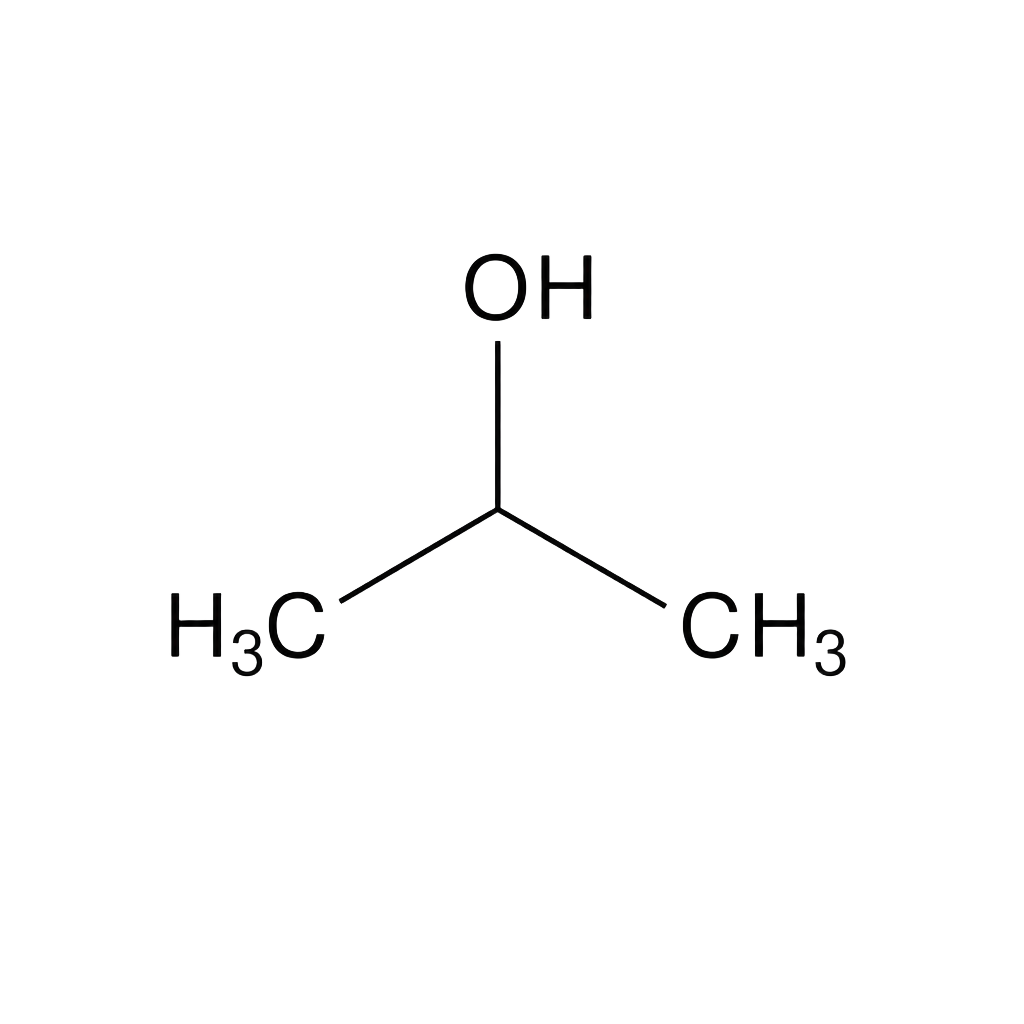
Worked example: 2-propanol in E. coli
The canonical validation case in [1] reproduces an experimentally demonstrated pathway from Jojima et al. [4] for 2-propanol production in E. coli K-12 MG1655: acetyl-CoA → acetoacetyl-CoA → acetoacetate → acetone → 2-propanol, with four non-native enzymes added (thiolase, acetoacetyl-CoA transferase, acetoacetate decarboxylase, and a secondary alcohol dehydrogenase). RetSynth recovers this route as one of its optimal solutions without being told the answer. On the same target, the tool can also enumerate sub-optimal pathways, useful when the 'best' enzymes are hard to express, IP-encumbered, or produce unwanted side products.
Scale and benchmarks
Run against MetaCyc, RetSynth identified at least one pathway for 3,462 of 15,706 target compounds, with an average of 7 pathways per producible target and an average wall-clock runtime of about 8 minutes per compound [1]. Of the enzymes that appeared across all solutions, a tight set of roughly 24 enzymes recurred in 50 or more pathways, a useful signal for where chassis engineering effort tends to pay off.
What In Silico Biolabs is adding
Our contribution is not the algorithm. It is the productization layer: porting the codebase from Python 2.7 to Python 3.12, integrating the Open Reaction Database to expand the reaction space at lower cost, building a group-contribution toolkit so users can plug in their own property models, wiring RetSynth into Met2Saf for toxicity-aware ranking, enriching outputs with PubChem metadata, and wrapping everything in a browser-based job runner. See the timeline below for the current status of each piece.
References
- [1]Whitmore L. S., Nguyen B., Pinar A., George A., Hudson C. M. RetSynth: determining all optimal and sub-optimal synthetic pathways that facilitate synthesis of target compounds in chassis organisms. BMC Bioinformatics 20:461 (2019). link
- [2]Orth J. D., Thiele I., Palsson B. Ø. What is flux balance analysis? Nature Biotechnology 28:245–248 (2010). link
- [3]Ebrahim A., Lerman J. A., Palsson B. Ø., Hyduke D. R. COBRApy: COnstraints-Based Reconstruction and Analysis for Python. BMC Systems Biology 7:74 (2013). link
- [4]Jojima T., Inui M., Yukawa H. Production of isopropanol by metabolically engineered Escherichia coli. Applied Microbiology and Biotechnology 77:1219–1224 (2008). link
- [5]Caspi R. et al. The MetaCyc database of metabolic pathways and enzymes: 2019 update. Nucleic Acids Research 48:D445–D453 (2020). link
Timeline
Licensing and program milestones alongside the Sandia × ISBL TRGR collaboration (12-month engagement, now completed).
Licensing & programs
- Jun 2024DoneRetSynth test & evaluation license executed
Signed a noncommercial test-and-evaluation EULA with Sandia/NTESS for RetSynth, a 24-month term that enabled the productization work.
- 2025DoneLicense amended to add Met2SAF
Amendment No. 1 to the EULA added Met2SAF to the licensed software, broadening the platform to toxicity and reaction prediction alongside RetSynth.
- Mar 2026DoneNMSBA 2026 award with Sandia
New Mexico Small Business Assistance engagement with Sandia for RetSynth installation modernization and analysis of four organisms for therapeutic-drug production potential.
Product development
- Sep 2024DoneTRGR project kick-off
Technology Readiness Gross Receipts (TRGR) award of $135,000 approved; kick-off meeting scheduled with Sandia PI Alexander Landera and PM John Martinez. Project begins.
- Months 1–5DoneCode redesign
Port the RetSynth codebase from Python 2.7 to Python 3.12 and remove inefficiencies in the legacy implementation. Mostly mechanical: import-statement and packaging changes, renamed or missing modules, no major changes to the underlying scientific logic.
- Months 1–6DoneModel development
Rather than try to build models for every disease state, we implemented a uniform way for users to import their own pre-developed property models. Built a group-contribution toolkit that fragments drug-like molecules (C, N, O, I, F, Br, Cl) into substructures users can plug their models into.
- In progressIn progressDatabase integration
Integrate the Open Reaction Database (millions of curated, free chemical reactions) to lower database cost and give customers more options. Core integration works; next is parallelization to bring runtimes down from hours to minutes.
- In progressIn progressRetSynth + Met2Saf integration
Connect the two engines into one workflow: Met2Saf identifies plausible reactions from a starting metabolite and flags toxic versus non-toxic products; RetSynth then finds optimal and sub-optimal production paths for the non-toxic products and ranks them by reaction count, feasibility, and toxicity.
- UpcomingUpcomingPredict drug targets and production routes
Apply the integrated pipeline to drug candidates relevant to In Silico Biolabs and generate predicted production pathways for downstream validation.
- UpcomingUpcomingValidation
Genetic engineering of a host organism and production testing with Rhodosporidium (Paul Adamzcyk), exploiting its strong fatty-acid production to attempt conversion to predicted targets, followed by data analysis.
- UpcomingUpcomingFinal report and next steps
Joint NTESS/ISBL final report. In parallel, pursue follow-on opportunities: a SPARKS concept on converting waste paper to advanced biofuels using OptiSynth, Tech Maturation funds to mature OptiSynth, and the Energy I-Corps program for customer discovery.